


Renovate or Move?
A Designer-Lender's Honest Framework
Ariane Bibas · Mortgage Loan Officer · NMLS #2833531 · CA DRE #02225025


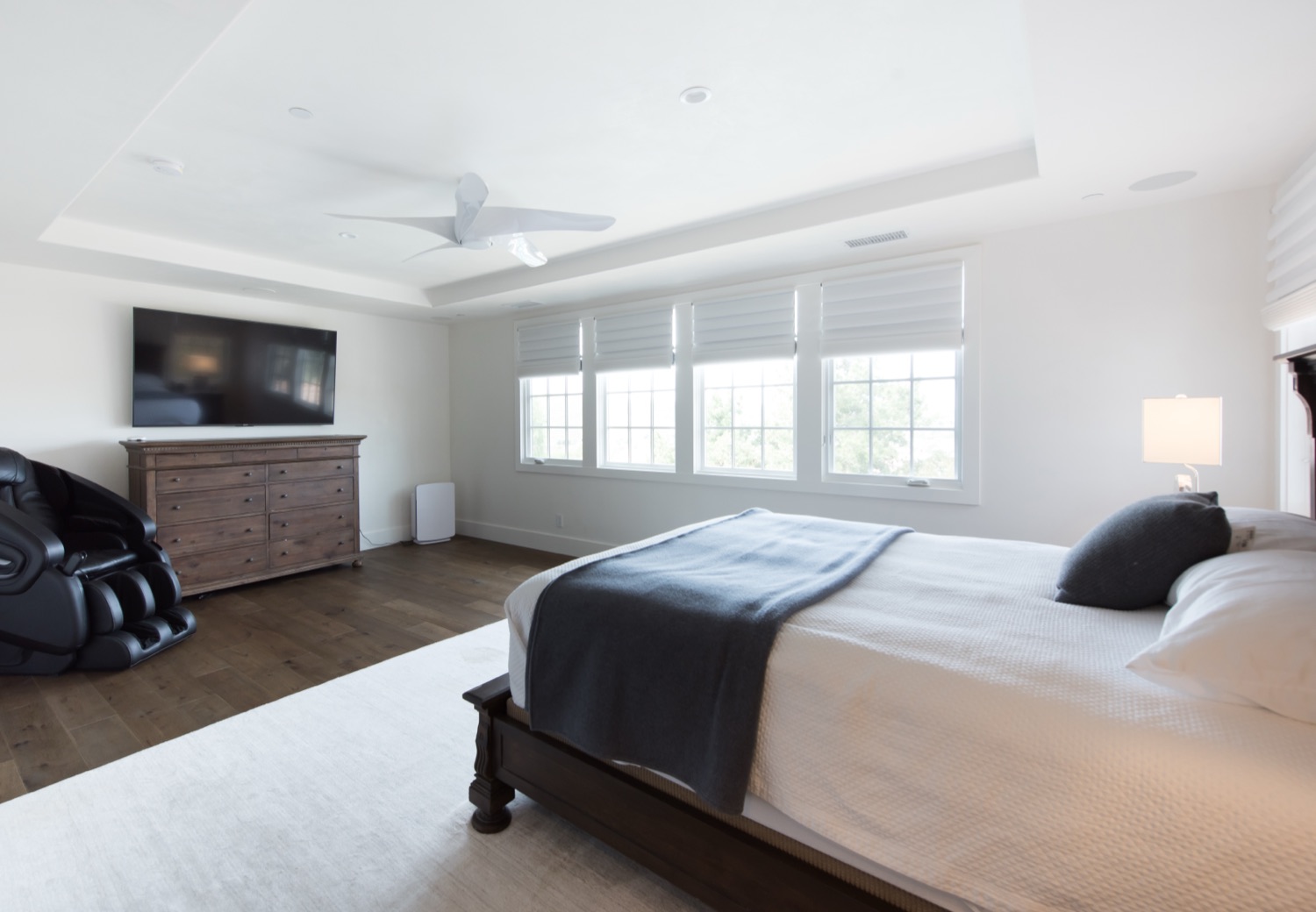 Before
After
Drag the slider to see the transformation.
Same primary bedroom. The renovation swapped a flat wall and TV stand for a marble fireplace surround, reworked the cove lighting on the tray ceiling, and replaced stock blinds with motorized shades — the kind of project this whole framework is about.
I've been asked this question at hundreds of kitchen tables over twenty years of design work. It used to be a design question. Today it's equally a financing question — because for many homeowners, a low existing mortgage rate is itself a valuable asset.
Start with the Unfixable
Renovation can change almost everything about a house — except its location, its lot, and its light. If the school district is wrong, the commute is crushing, or the lot can never give you the yard you want, no budget fixes that, and moving may make more sense.
But if what you hate is the layout, the kitchen, the finishes, or the flow — those are exactly the things renovation does best, and often (though not always) for less than the cost of trading houses.
The Math Most People Skip: The Cost of Leaving
- Your current mortgage rate. If you're locked well below current rates, a new purchase reprices your entire debt. On a large balance, that difference alone can exceed the cost of a significant remodel.
- Transaction costs. Selling and buying can consume a meaningful share of your home's value in commissions (which are negotiable), transfer taxes, and moving costs — money that buys zero improvement in your life.
- Property tax reset. In California especially, a new purchase can reset a tax basis you've protected for years. (General information only — consult a tax professional about your situation.)
The Renovation Side of the Ledger
Be equally honest here. A whole-home remodel means months of disruption, decisions, and managing (or paying someone to manage) the process. Budgets need a real contingency — 10–15%, not a hopeful zero. And not all improvements return equally: kitchens, primary suites, and added square footage tend to hold value; over-personalized work often doesn't.
How the Financing Fits
- Keeping a great first-mortgage rate? A HELOC can fund the renovation without touching it.
- Buying a fixer instead? A renovation loan can finance purchase and construction against the estimated after-renovation value.
- Rates below your current rate? A cash-out refinance may be worth comparing to fund the work and change your loan terms at once.
The Framework in One Paragraph
If location fails, moving may make more sense. If location works and the problems are inside the walls, price the renovation honestly, price the cost of leaving honestly — rate, transaction costs, taxes — and compare. In my experience, homeowners who run both numbers stay and renovate more often than they expect. Either way, I can help on every side of it: the design and financing if you stay, the sale and purchase if you go — each a separate service, and where I act in more than one role, full disclosure and your written consent come first.
Stuck on this exact decision? It's my favorite conversation — book a call and bring your honest list of what you'd change.